
How to Style Estate Jewelry With Modern Outfits
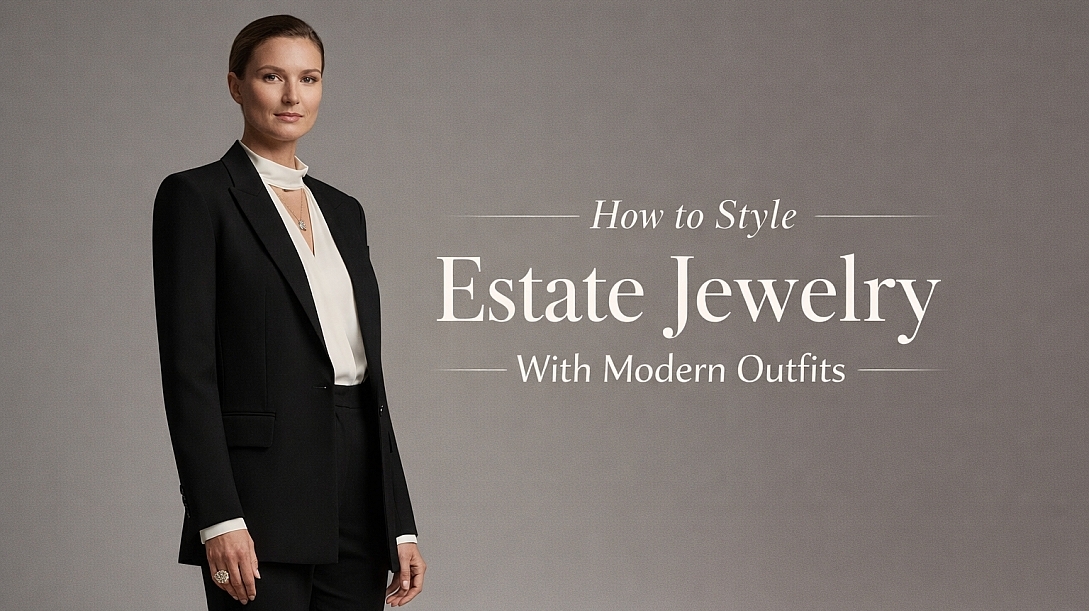
Styling estate jewelry with modern outfits comes down to contrast, balance, and proportion. You pair detailed estate jewelry like antique rings and vintage necklaces with clean silhouettes, structured tailoring, and restrained color palettes so the craftsmanship becomes the focal point.
As a trained jeweler, I look at construction first. Old European cut diamonds, hand-engraved shoulders, milgrain edges, and platinum filigree mountings carry visual weight. When you control scale, metal tone, and neckline placement, you create a look that feels deliberate and current rather than overly nostalgic.
You can use various online tools and apps for more inspiration, but for now, let’s break down exactly how you can apply these principles to rings, necklaces, earrings, and brooches in a modern wardrobe.
Start With One Estate Statement Piece
Choose one estate statement piece and build your outfit around it. Antique rings with old mine cut diamonds, hand engraving, or raised galleries already carry depth. Vintage necklaces with filigree pendants or bezel-set gemstones draw attention through craftsmanship alone.
Avoid stacking intricate mountings. Milgrain edges, openwork platinum, and detailed shoulders create texture from every angle. Layering multiple ornate pieces creates visual noise.
Let antique detail stand against clean tailoring. A structured blazer or minimalist dress gives your estate jewelry space to stand out and keeps the look balanced and refined.
Pair Estate Rings With Structured Modern Clothing
Estate rings carry detail and height, so your clothing needs structure to support them. Clean tailoring keeps the look sharp and controlled.
1. Art Deco Rings With Blazers and Minimal Dresses
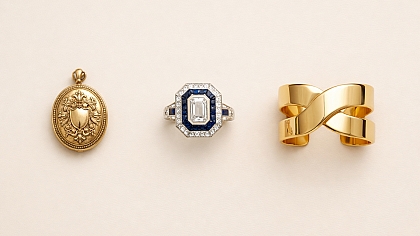
Art Deco rings feature geometric lines, step-cut diamonds, and platinum mountings. Pair them with structured blazers, tailored trousers, or minimalist dresses. The clean lines of modern clothing mirror the symmetry of the ring and keep the focus on the craftsmanship.
2. High-Profile Victorian Clusters and Sleeve Balance
Victorian cluster rings often sit higher on the finger with domed heads and engraved yellow gold shanks. Choose cropped or tailored sleeves so the ring remains visible. Avoid oversized cuffs that compete with its volume.
3. Coordinate Metal Tone With Your Outfit
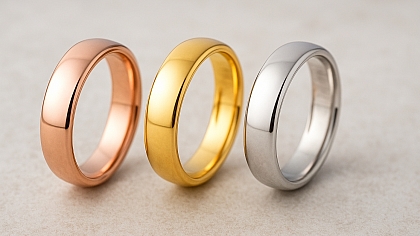
Platinum reads cool and modern. Pair it with monochrome or deep neutral tones. Yellow gold feels warmer and richer. Balance it with restrained, structured outfits so the ring looks refined, not heavy.
Match Estate Necklaces to Modern Necklines
Estate necklaces demand precise placement. You must map the pendant drop or strand length to your neckline so the piece looks intentional.
1. Pendant Drop Length and Neckline Mapping
Measure where the pendant sits before choosing your outfit. A vintage pendant with a bezel-set diamond or filigree frame, especially a structured drop design like a lavalier necklace, should sit clearly above or below the neckline edge. With V-necks, let the pendant sit inside the V. With high crew necks, choose a longer chain that drops below the collar.
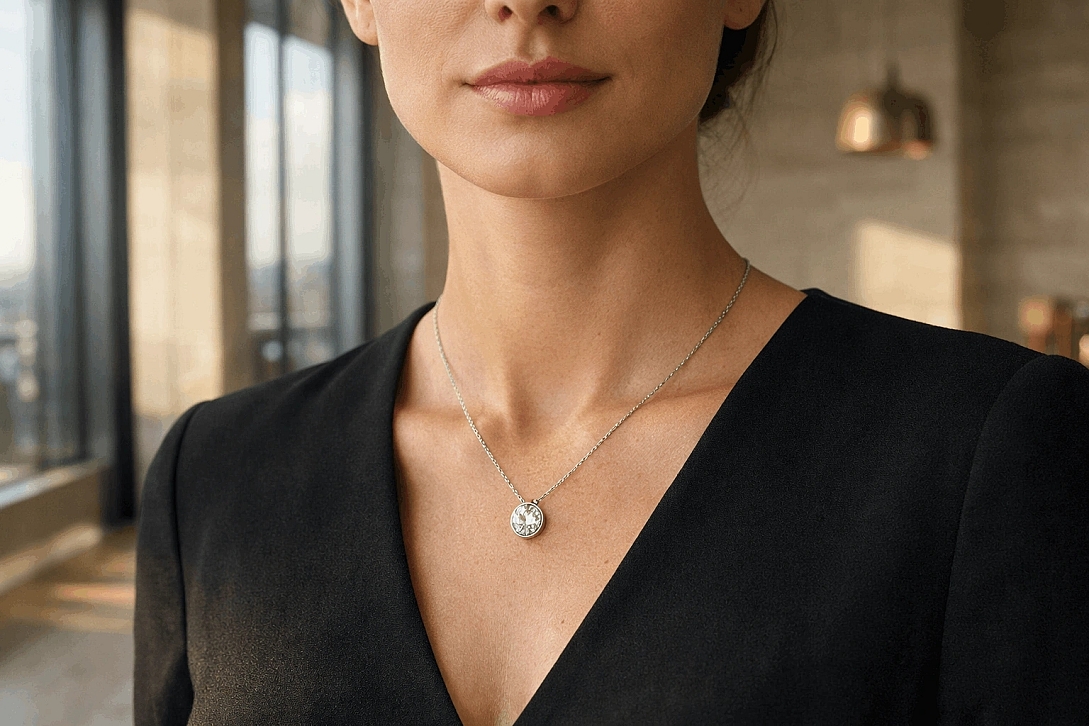
Avoid letting the pendant rest directly on the neckline seam. That placement looks accidental and breaks proportion.
2. Pearl Strands With Minimalist Outfits
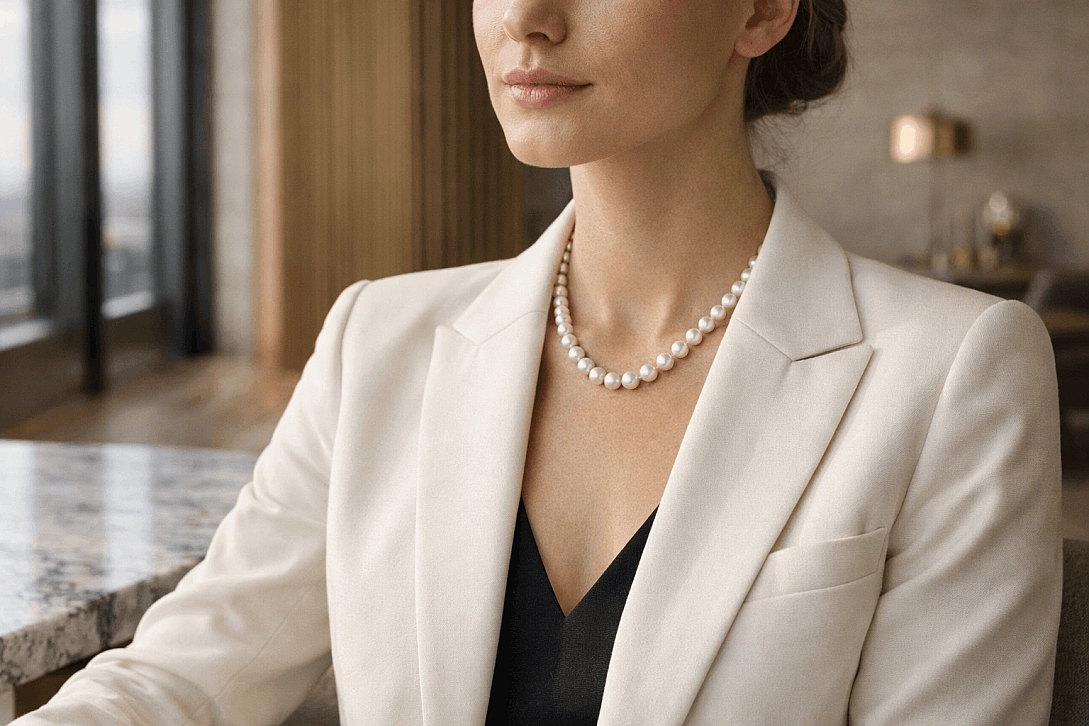
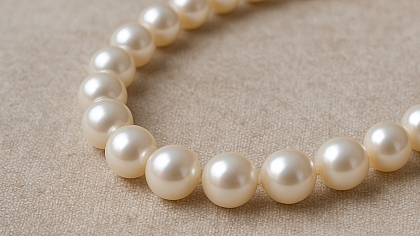
Graduated pearl strands in 16–18 inch lengths work best with clean silhouettes. Pair them with sharp blazers, slip dresses, or monochrome tops. The smooth surface of pearls contrasts well with structured tailoring and keeps the look modern.
3. Avoid Competing Fabric Details
Estate necklaces often feature milgrain edges, engraving, or gemstone clusters. Do not pair them with lace, heavy prints, or textured ruffles. Choose smooth fabrics like silk, crepe, or fine wool so the craftsmanship remains the focal point.
Style Estate Earrings With Clean Hair and Makeup
Estate earrings already carry detail through stone cut, metalwork, and setting style. Keep your hair and makeup controlled so the design reads clearly.
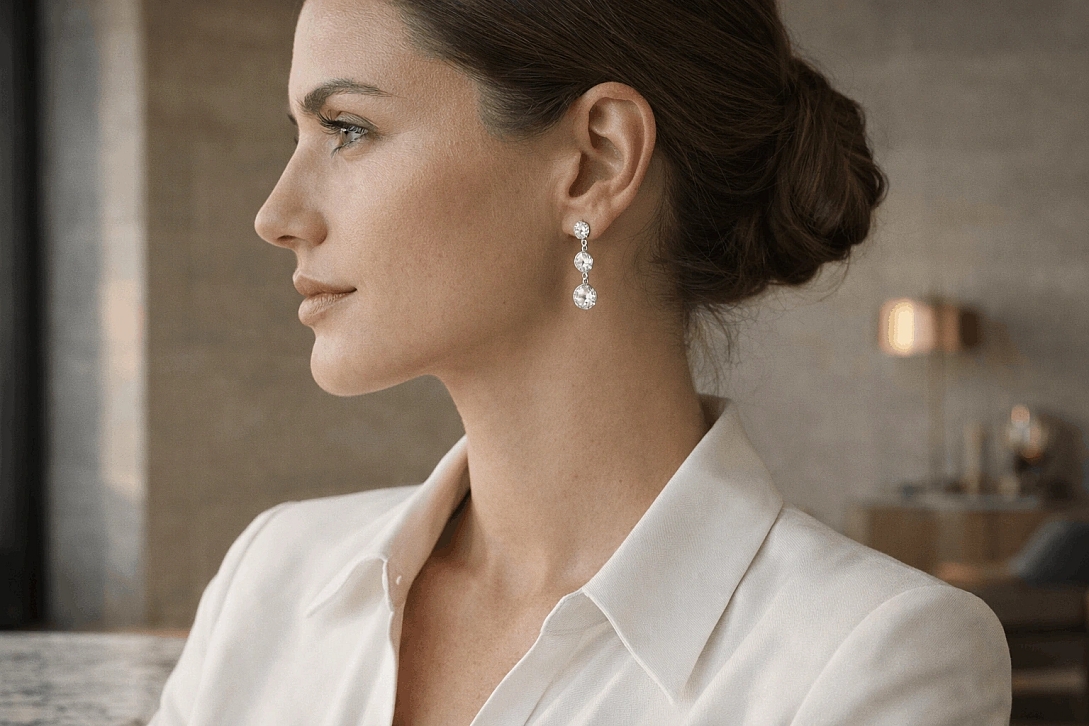
1. Drop Earrings With Sleek Silhouettes
Vintage drop earrings with old European cut diamonds or bezel-set sapphires move and catch light differently than modern pieces. Wear them with pulled-back hair, low buns, or straight styles. Pair them with clean necklines and structured dresses so the drop length stays visible and balanced.
Avoid busy collars or layered necklaces. Let the earrings remain the focal point.
2. Studs for Sharp Professional Looks
Estate studs in platinum or 18k gold work well in tailored office outfits. Emerald-cut or round diamond studs sit close to the ear and complement blazers, crisp shirts, and minimal knitwear. Their compact scale keeps the look polished and precise.
3. Control Scale Based on Collar Height
High collars require smaller studs or short drops. Open necklines allow longer dangle earrings. Match the vertical length of the earring to the space between your jawline and collar so proportions feel deliberate and refined.
Use Estate Brooches in Modern Placements
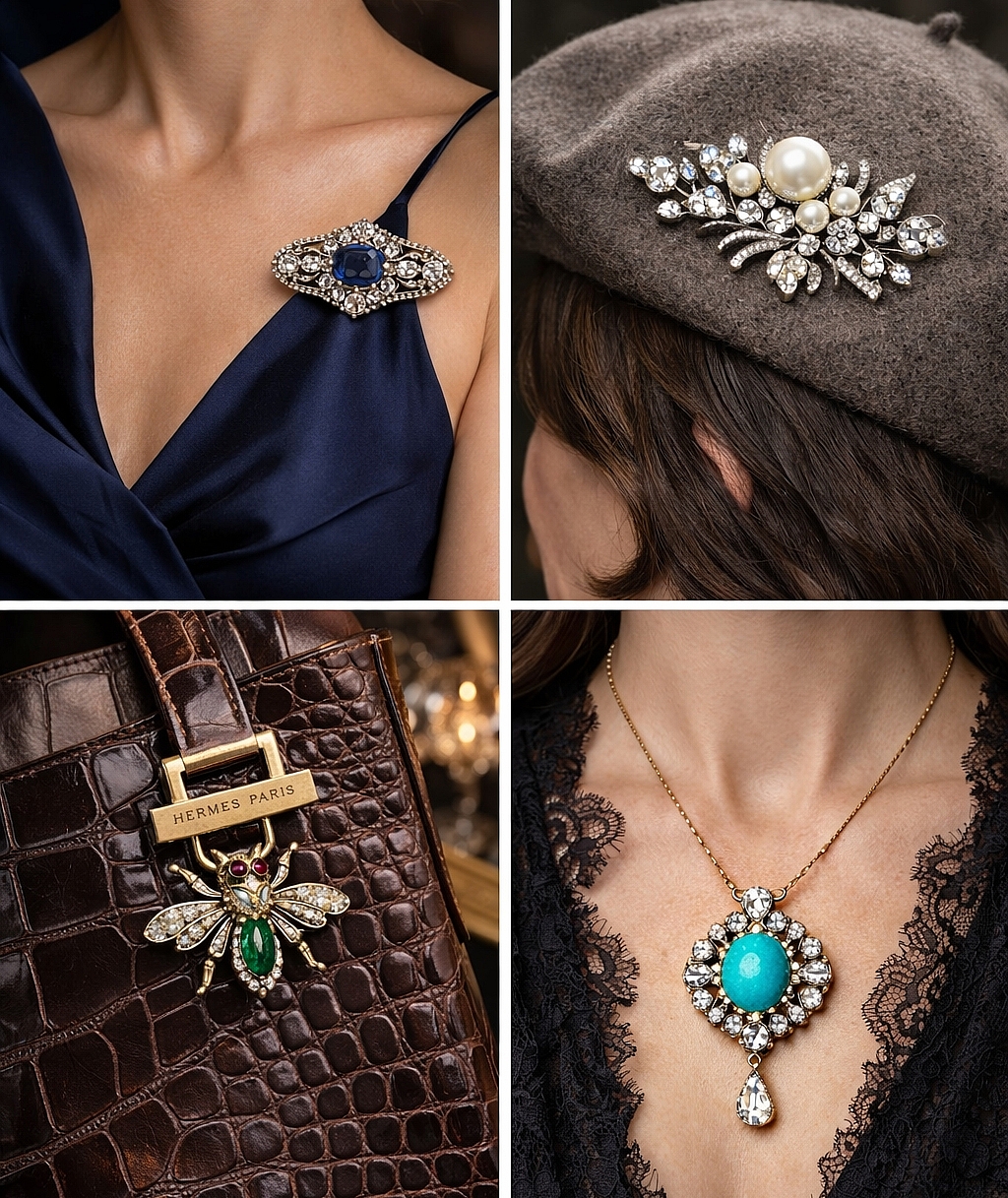
Estate brooches add character, but placement determines whether they look refined or theatrical. Choose structured surfaces that support the pin mechanism and the weight of the piece.
1. On Structured Blazers
Pin an estate brooch on the lapel of a tailored blazer. Place it slightly above the bust line for balance. Thick wool or structured crepe holds vintage pin stems securely and keeps the brooch flat against the fabric.
Avoid soft, draped materials that allow the piece to tilt or pull.
2. On Tailored Coats
Heavy gold or gemstone-set brooches work well on tailored coats. Center them near the collarbone or slightly off-center for a modern feel. The firmness of the coat fabric supports larger designs without distortion.
3. On Structured Handbags
Attach smaller estate brooches to structured leather handbags. Choose pieces with secure safety clasps. The clean surface of the bag lets engraving, milgrain edges, or gemstone settings stand out without competing with details.
Avoid These Common Styling Mistakes
Small styling errors can make estate jewelry look busy instead of intentional. Keep your focus on clarity, spacing, and proportion so the craftsmanship reads clean against modern clothing.
- Mixing ornate prints with ornate jewelry: Skip loud florals, lace, and heavy textures when your piece has filigree, engraving, or a cluster head.
- Over-layering vintage textures: Avoid stacking multiple detailed pieces, like a milgrain ring with a filigree pendant and patterned earrings. Pick one focal point.
- Ignoring scale and proportion: Match ring height to sleeve shape, earring length to collar height, and necklace drop to neckline depth so nothing competes.
Styling estate jewelry with modern outfits works when you respect balance, proportion, and restraint. Let one well-crafted piece lead, and support it with clean lines and structured silhouettes.
Estate jewelry carries hand engraving, old cut diamonds, platinum filigree, and solid 18k gold construction that modern mass production rarely replicates. When you understand that craftsmanship, you style with intention instead of imitation.
Wear your pieces with confidence. Heirloom-quality jewelry does not need excess. It needs clarity, space, and a modern frame that allows its history and design to stand on their own.
LEAVE A COMMENT
Categories
Recent Posts

0.0545